


Quick answer: Your website needs a redesign in 2026 if any of these are true: it loads slowly on mobile, it looks dated next to your competitors, it doesn’t show up in Google AI Overviews, it hasn’t been updated in two years, your enquiries have dried up, the platform it’s built on is no longer supported, it’s not getting cited by ChatGPT or Perplexity, your traffic has dropped after recent Google updates, you’re embarrassed to share the URL, or the business has outgrown what the site says about you. If more than two apply, it’s time.
Last updated: 11 May 2026.
A website is the cheapest, hardest-working member of your team, until it isn’t. When it starts working against you, it does so quietly. There’s no error message that says “this site is losing you customers.” You just notice, eventually, that the phone rings less than it used to.
Below are the ten signs we see most often when a small business books in for a redesign. Most clients tick three or four. If you tick five or more, the cost of not rebuilding is almost certainly bigger than the cost of rebuilding.
1. It’s slow on mobile
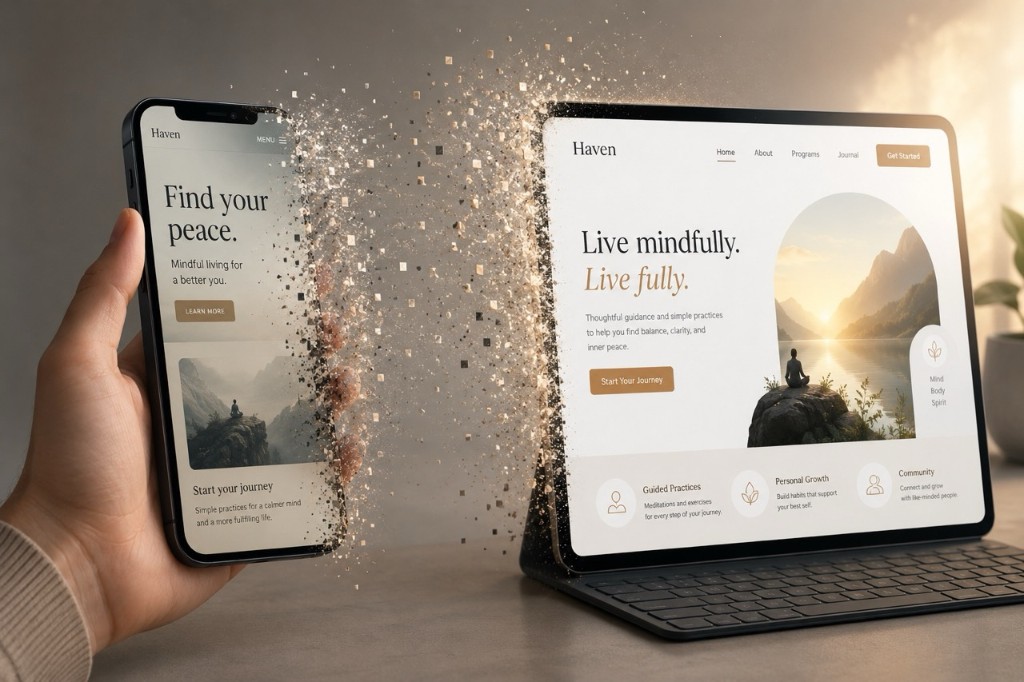
Open your site on your phone. Time how long it takes from tap to fully usable. If it’s more than three seconds, you’re losing visitors.
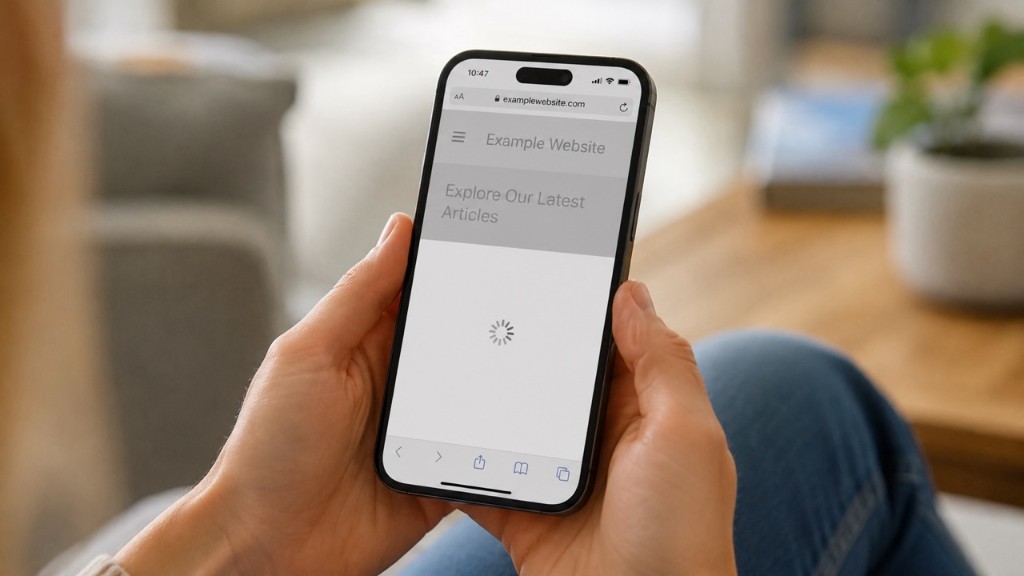
Mobile speed isn’t just a Google ranking factor in 2026, it’s the ranking factor that grew teeth this year. Sites that score below 50 on Google’s mobile PageSpeed test routinely drop two or three positions when AI Overviews are involved, because the AI has no time to wait for a slow page to render before it picks a different source to cite.
If your site is on WordPress with a heavy theme and a dozen plugins, mobile speed is almost certainly the issue. Worth checking before anything else: it’s the cheapest thing to diagnose and the biggest single lever on rankings.
2. It looks dated next to your competitors
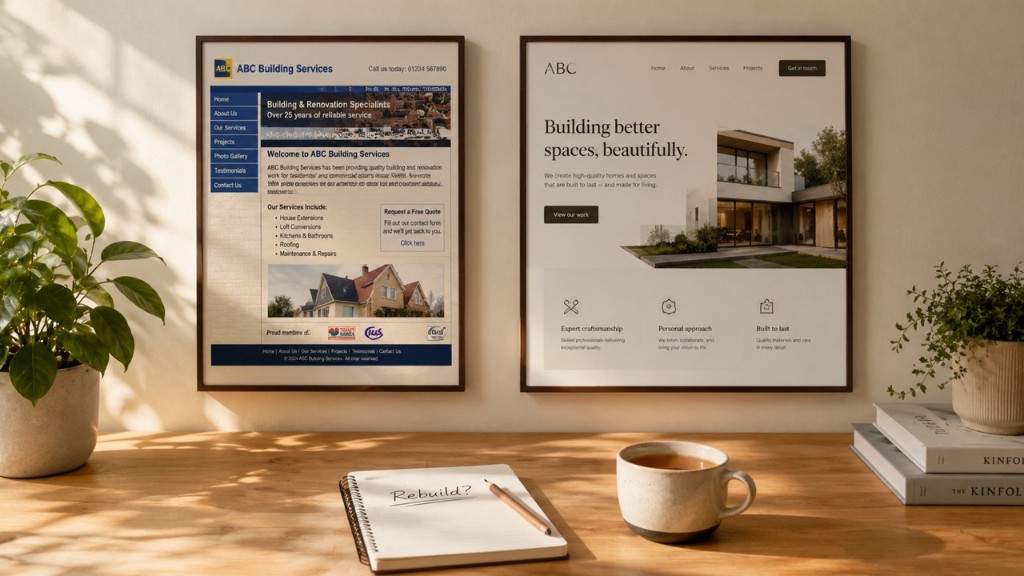
Open three of your closest competitors’ websites in tabs alongside yours. Be honest. Does yours look like it belongs in the same year?
Design fashion does change, what felt premium in 2021 (massive sliders, stock imagery, “We are passionate about” headlines, three-column “Why Choose Us” boxes with icons) reads as tired in 2026. You don’t need a redesign every two years. You do need a redesign when your visitors will subconsciously assume your business is behind the times because your website is.
This matters more than people think. We’ve audited sites where the actual product was better than the competitor’s, but the competitor was winning enquiries because their site looked five years newer.
3. You don’t appear in Google AI Overviews for your own services
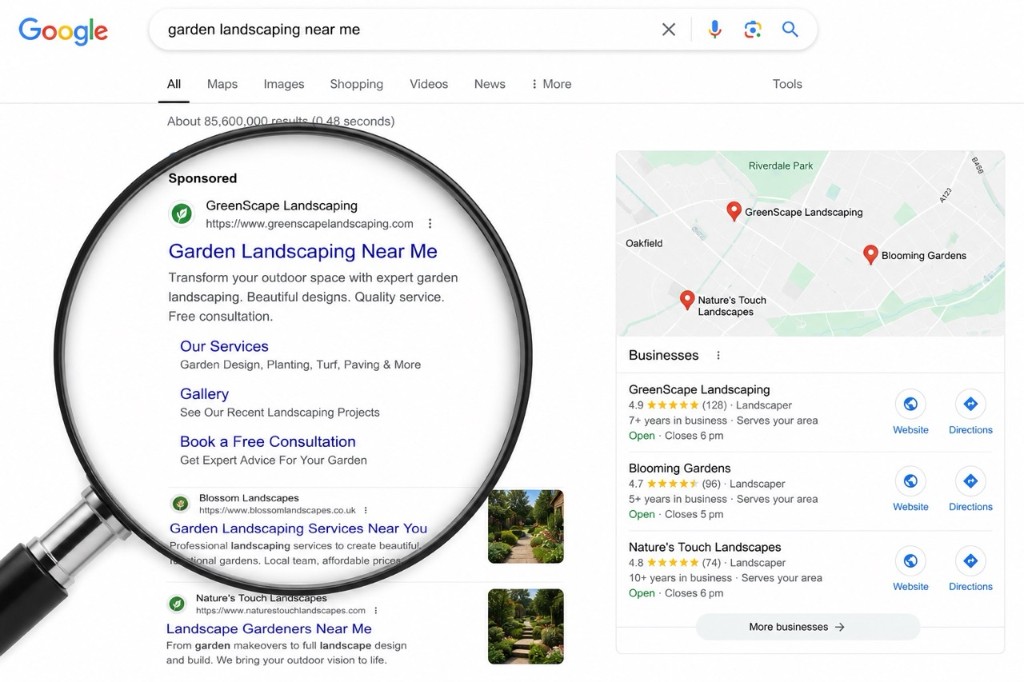
Search for your own services on Google. Add “near me” or your city. Do you see an AI Overview at the top, that grey or shaded block of summarised answer? Are you cited in it?
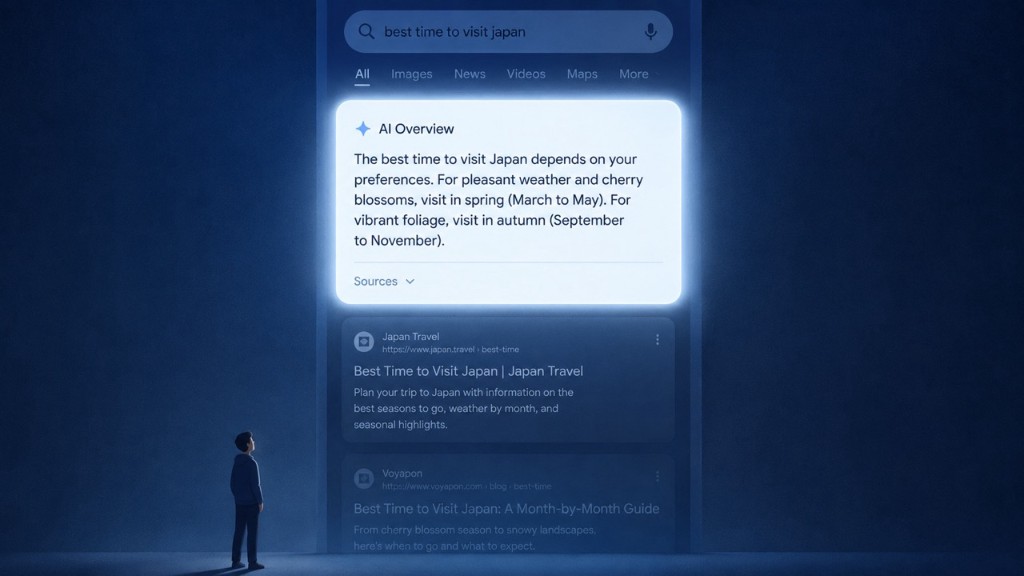
If the answer is no, your site isn’t structured for the way Google ranks in 2026. AI Overviews now appear on the majority of commercial searches, and they pull from sites with clear, structured content, front-loaded answers, question-style headings, FAQ schema, recent dates. If your homepage is a hero image with three buttons and your blog is empty, you’re invisible to this layer.
The fix is partly content, partly markup, and partly site structure. A redesign is the natural moment to do all three.
4. It’s not getting cited by ChatGPT or Perplexity
Ask ChatGPT or Perplexity: “Who are the best [your service] companies in [your city]?” Are you in the list? Is your site linked as a source?
This is a 2026 problem most agencies are still pretending doesn’t exist. LLM-referred visitors convert around 4.4 times better than organic search visitors, which means losing this channel is more expensive than losing equivalent traffic from Google. If your site isn’t being read and cited by AI search, you’re losing the most valuable visitors on the internet.
The same fixes that help Google AI Overviews help here: clean HTML, structured data, dated content, named author bios, real numbers. Most WordPress sites built before 2024 don’t have any of that by default.
5. Your enquiries have dropped, and you can’t explain why
Look at your enquiries over the last 12 months versus the 12 months before. Is the line going down even though you’re doing more marketing?
This is the most common reason clients walk into a redesign conversation. Something has shifted under them and they can feel it in the pipeline. Usually it’s a combination of the previous four points, slower mobile, dated design, missing from AI search, but the symptom is the only thing they notice.
Don’t wait until the drop is six months old. The longer the trend runs, the more rebuild and recovery you’re paying for.
6. Your site hasn’t been meaningfully updated in two years
Date freshness has become a much bigger signal in 2026. Google’s AI explicitly prefers recent, accurate information when it picks sources to cite, and content decay (the slow ranking loss that hits old, untouched pages) is well documented now.
Look at your blog. Look at your services pages. When was anything last edited? If the answer is “2022” or “I’m not sure,” your site is silently losing ground to fresher competitors every week.
A redesign is the cleanest moment to publish fresh content, refresh existing pages with 2026 stats and dates, and set up a sustainable cadence going forward.
7. The platform it’s built on is no longer supported (or barely supported)
If your site is on a custom HTML build from 2014, a defunct page builder, or an old Joomla install, you’re in fragile territory. Things will break. Security holes won’t be patched. The cost of fixing problems eventually exceeds the cost of rebuilding from scratch.
We saw a wave of this in 2025 when several legacy WordPress page builders stopped active development. If you’re on something where the dashboard hasn’t been updated in 18 months, plan the move before you have to.
8. You’re embarrassed to share the URL
This is the simplest test and the most honest. When someone asks for your website at a networking event, are you proud to say it? Or do you find yourself adding “we’re updating it”?

That involuntary apology is data. Your subconscious knows the site doesn’t match the business any more.
9. Traffic dropped after a recent Google update
Google rolled out core updates in March 2026 and a smaller update in May. Both rewarded topical authority (sites that go deep on a clear topic with a cluster of supporting content) and penalised thin, generic content (one-page service descriptions with no supporting articles around them).
If your traffic dropped meaningfully after either of these, your site probably reads to Google as “another generic service site” rather than an authority in your niche. A redesign that bakes in a content strategy, pillar pages, supporting articles, topical depth, is the structural fix.
10. The business has outgrown what the site says about you
Maybe you started out as a one-service freelancer and you’re now a three-person team with five service lines. Maybe you’ve moved upmarket and you’re getting briefs from clients who don’t match your old positioning. Maybe you’ve added a brand-new offering (an AI app, an ecommerce arm, a new location) and the site doesn’t say so.
The website should always be slightly ahead of where the business is, not behind it. If a prospect looking at your site today would assume you’re smaller, less capable or less specialist than you actually are, you’re losing pitches before you even get to the conversation.
So how much does a redesign actually cost?
Honest answer: in the wider market, somewhere between a focused one-pager and £8,000+ for a multi-page lead-generation site, plus optional SEO from £349/month. At dotwall, we quote each website project individually. We laid out the industry ranges in our 2026 Leicester website cost guide.
The good news is that a 2026 redesign is often less expensive to maintain than the site it replaces. We’ve moved most new builds onto a custom Astro stack, here’s why, which removes WordPress’s plugin-and-patching overhead almost entirely. Cheaper hosting, calmer maintenance, faster site.
The fastest way to find out if you need a redesign
You don’t need an audit, a proposal or an hour-long call to find out. You can ask us for a free homepage preview, we’ll design a new homepage for your business, send you a video walking you through the choices, and you can put it side by side with what you’ve got now. If the new one obviously beats the old one, you have your answer. If it doesn’t, you’ve lost nothing.
That’s the no-risk way to test it. No commitment, no pressure, no four-figure spend until you’ve seen what you’re buying.
Ben, dotwall
Website redesign FAQs
Common questions on when to rebuild, what it costs, and what's changed in 2026.
How do I know if my website needs a redesign in 2026?
Your website needs a redesign in 2026 if more than two of the following are true, it loads slowly on mobile, looks dated next to your competitors, doesn't appear in Google AI Overviews, hasn't been updated in two years, your enquiries have dropped, the platform is no longer supported, it isn't cited by ChatGPT or Perplexity, traffic dropped after a recent Google update, you're embarrassed to share the URL, or the business has outgrown what the site says about you.
How much does a website redesign cost in 2026?
Will a new website improve my Google rankings?
Usually yes, but only if the redesign fixes the underlying issues. A faster, well-structured site with topical depth, schema markup and fresh content is rewarded by both Google's core algorithm and AI Overviews. A purely cosmetic redesign on top of the same slow platform won't move rankings on its own.
How do I get cited by ChatGPT, Perplexity and Google AI Overviews?
How long does a website redesign take?
A one-page redesign typically takes 1–2 weeks. A multi-page Business Website is 3–6 weeks. Custom or ecommerce redesigns run 6–12 weeks. The variable is almost always how quickly content and feedback come back from the client side, not the build itself.
Do I have to rebuild on a new platform, or can I keep WordPress?
What's the lowest-risk way to find out if my site needs a redesign?
No questions match your search. Try different keywords.