

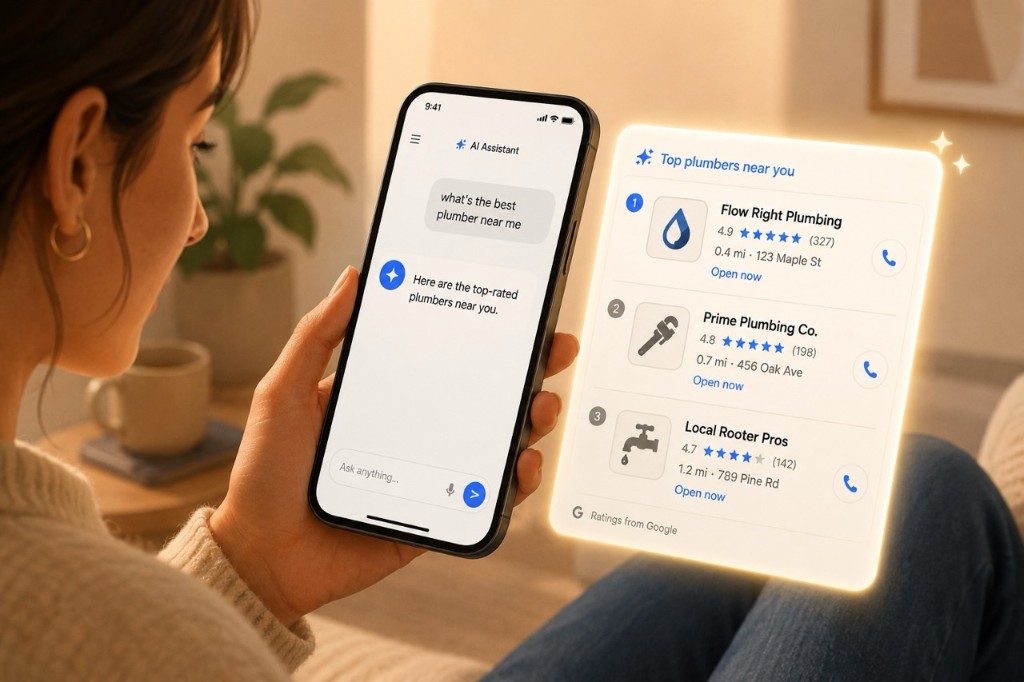
There’s a quiet shift happening in how people find local businesses. They’re still searching, but increasingly, they’re not opening Google. They’re typing “best vegan brunch near me” into ChatGPT. They’re asking Perplexity to “find a reliable mechanic in Leicester.” They’re reading Google’s AI Overview at the top of the page instead of scrolling past it to the blue links.
And here’s the part that should worry every local business owner: if you’re not in those answers, you’re invisible. There’s no second page, no “see more results” link. AI gives a short list of recommendations, and that list is the entire shop window.
The good news is that the rules for showing up are knowable. They’re not identical to classic SEO, but they overlap a lot. Here’s what’s working in mid-2026, and what you can do this month to start appearing in more AI answers.
How AI search actually works for local queries
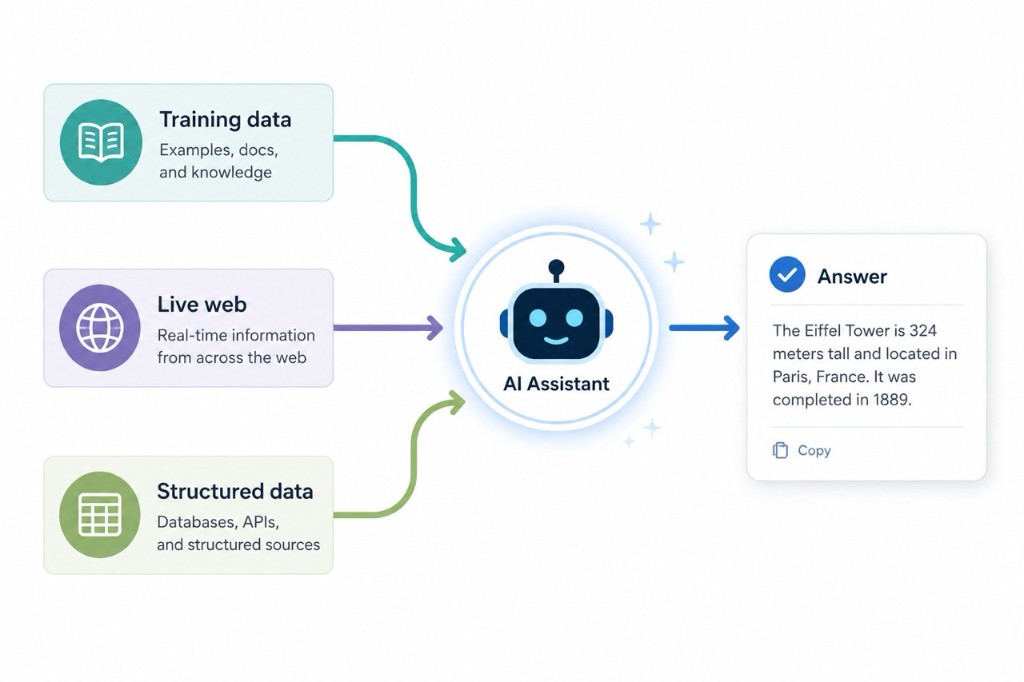
Traditional Google ranking is a popularity contest decided by links and content. AI search is more like a research assistant asking around. When someone asks ChatGPT for “the best dog groomer in Birmingham,” it doesn’t pull a ranked list from an index. It synthesises an answer from three sources:
- What it was trained on, public web data up to its training cutoff. This includes your website, directory listings, news articles, forums and reviews.
- Live web search, modern AI tools augment training data with real-time queries. ChatGPT browses, Claude searches, Perplexity is built around search.
- Structured data, schema markup, NAP listings, and citations from trusted sources that the AI can confidently extract from.
The implication is that to be visible to AI, you need to exist in clean, structured, citation-friendly form across the web, not just rank well on a single results page. A great website on its own isn’t enough anymore. You need to be coherent and findable everywhere AI looks.
Google Business Profile is still the foundation
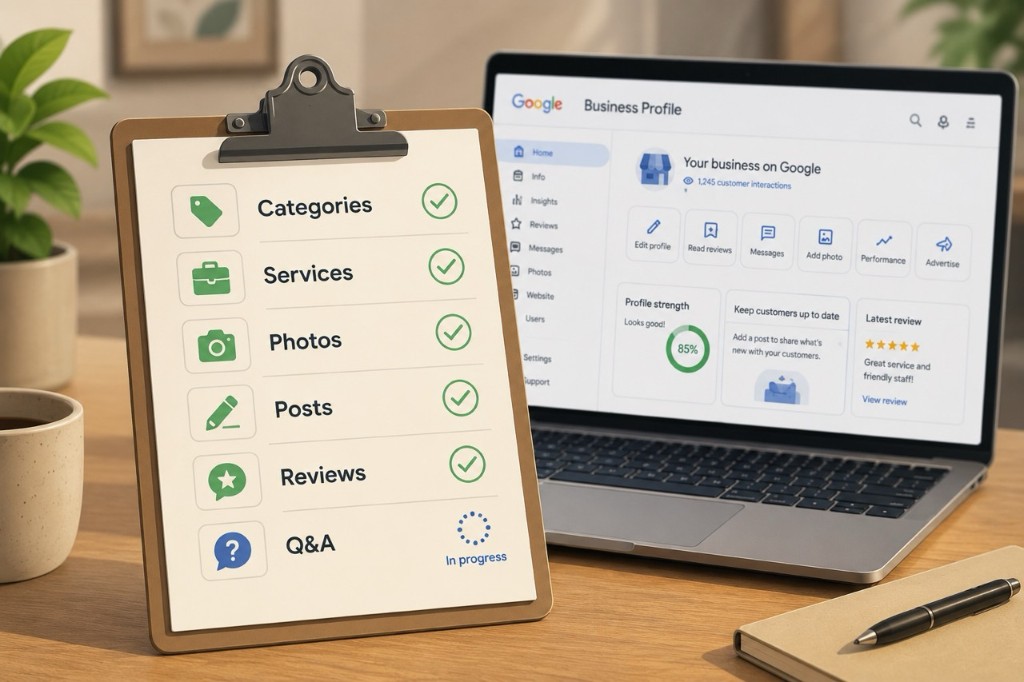
It might feel old-school, but Google Business Profile (GBP) remains the single most influential structured data source for any AI tool that handles local queries. Google’s own AI Overviews lean on it heavily, and other AI systems use GBP-derived directories as ground truth.
If your GBP isn’t fully filled out, nothing else you do here matters as much. Specifically:
- Categories, primary and secondary, as specific as the options allow.
- Services, every service listed, each with its own short description.
- Opening hours, current, with holiday exceptions added in advance.
- Photos, recent, high quality, geo-tagged where possible.
- Posts, weekly updates with actual offers or news, not generic filler.
- Q&A, proactively populated with the questions you know customers ask.
- Reviews, responded to, every single one.
AI tools cross-reference your GBP against your website. Inconsistencies (wrong opening hours, mismatched phone numbers, outdated address) make them less likely to recommend you because they can’t verify which version is correct. Make your GBP and your site agree on every detail.
Schema markup, the AI-readable layer of your website
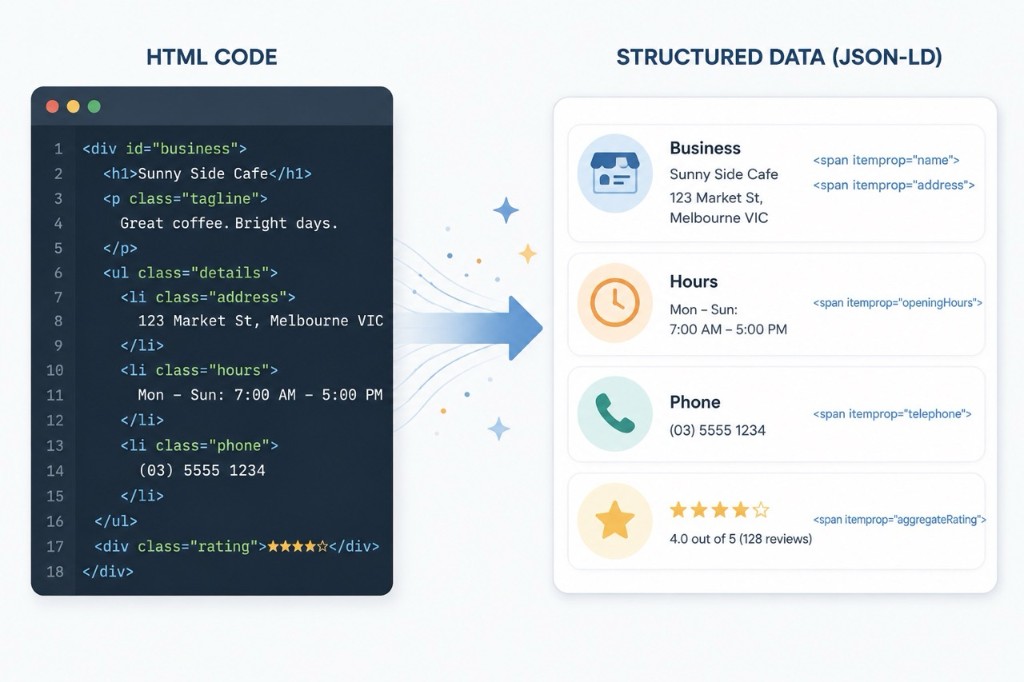
If GBP is your structured data on Google’s side, schema markup is your structured data on your own site. It’s how you tell AI tools, in machine-readable form, exactly what your business is and does.
The four schema types that matter most for local visibility right now:
- LocalBusiness (or the more specific subtype. Restaurant, Plumber, Dentist, etc.). This declares your name, address, phone, opening hours, services, and price range.
- Service, one entry per service you offer, with clear descriptions.
- Review and AggregateRating, so AI can confidently say “rated 4.8 from 217 reviews.”
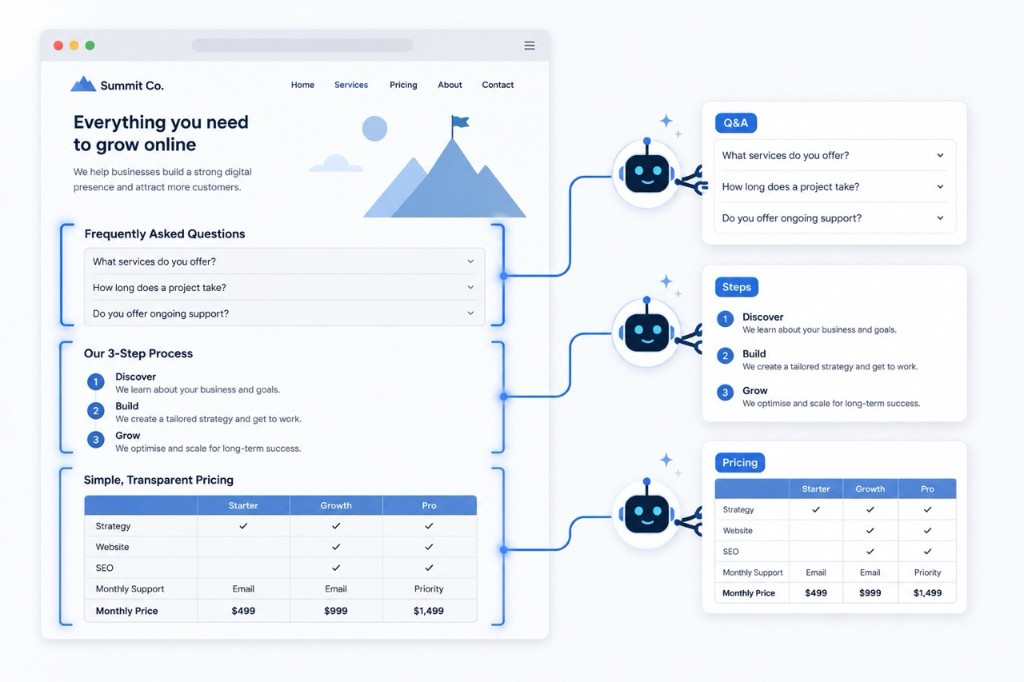
- FAQPage, for any FAQ section on your site. AI tools love to extract from these because they’re already in question-and-answer format.
Most websites, even recently built ones, have either no schema or broken schema. Use Google’s Rich Results Test to check yours. Then fix it, and watch how often your business starts appearing in AI summaries over the following weeks. Schema is the cheapest, fastest improvement most local businesses can make and almost nobody is doing it properly.
If you’re rebuilding or refreshing your site, a fast, schema-friendly stack, like the Astro sites we ship at dotwall, makes this much easier to maintain than a plugin-heavy WordPress setup.
Write content AI actually wants to cite
AI tools cite specific kinds of content much more than others. If you understand what they reach for, you can write content that pulls your business into more conversations.
The patterns that get cited:
- Definitive answers to common questions. “How much does a roof repair cost in Leicester?”. a clear, honest, structured answer. Not “it depends, contact us.” Real numbers, real ranges, real conditions.
- Locally specific guides. “The 7 best parks for dog walking in Loughborough” written by a local dog groomer. AI loves these because they prove local expertise and provide extractable lists.
- FAQ pages with proper schema. Question, answer, marked up. Easy to extract, easy to cite.
- Comparison content. “Composite vs. wooden decking in the UK climate” written by a local builder. AI uses comparison content constantly when users ask “which is better for…?”
The unifying principle: write the way you’d want an AI to summarise you. Lead with the answer. Be specific. Use real numbers, real names, real places. Vague marketing copy doesn’t get cited because there’s nothing in it to extract.
The directory web, what AI actually reads from
When AI tools synthesise a local answer, they don’t just read your website. They read the directories your business is listed on. Get the listings right and you’ll appear in more answers, even when you’re not the first result Google shows.
The directories that matter:
- General: Google Business Profile, Bing Places, Apple Maps, Yell, Yelp, Tripadvisor, Trustpilot.
- Industry-specific: Checkatrade, MyBuilder and Rated People for trades; OpenTable and Resy for restaurants; Bark for services; Booking.com and Airbnb for hospitality; Doctify for healthcare.
- Local: chamber of commerce listings, council business directories, local newspaper “best of” round-ups.
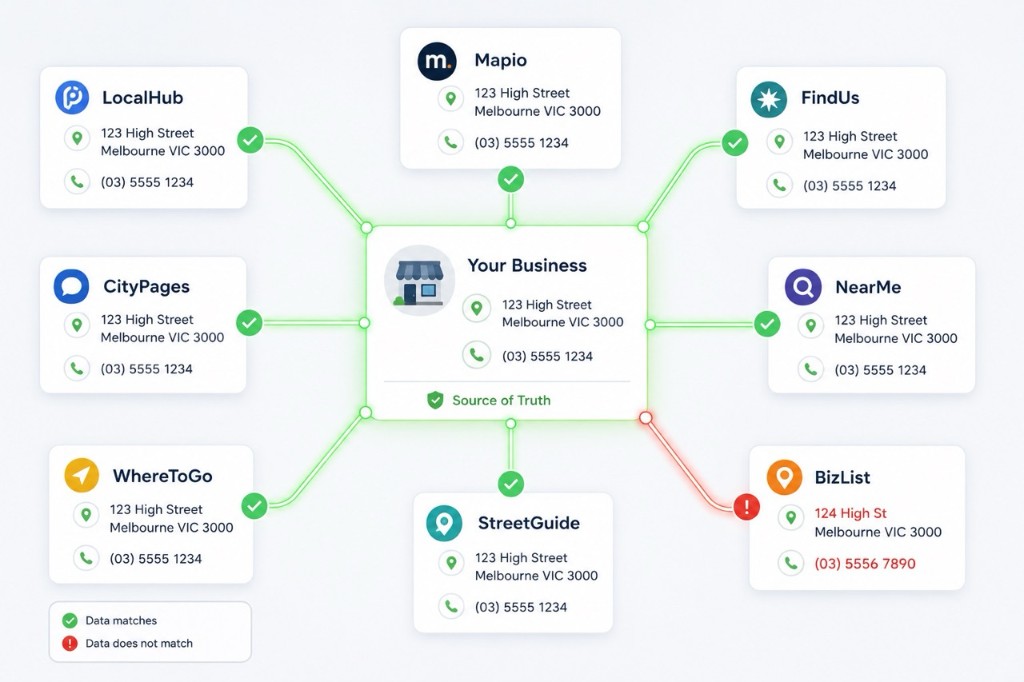
Two things matter on every listing: NAP consistency (Name, Address, Phone, identical everywhere, character for character) and completeness (description, photos, services, hours, all filled in). Inconsistent NAP is one of the strongest negative signals you can send AI tools, it makes them uncertain about your identity, so they default to recommending someone else. Spend a Friday afternoon auditing yours. It’s the kind of one-off work that pays back for years.
Reviews are the new vote
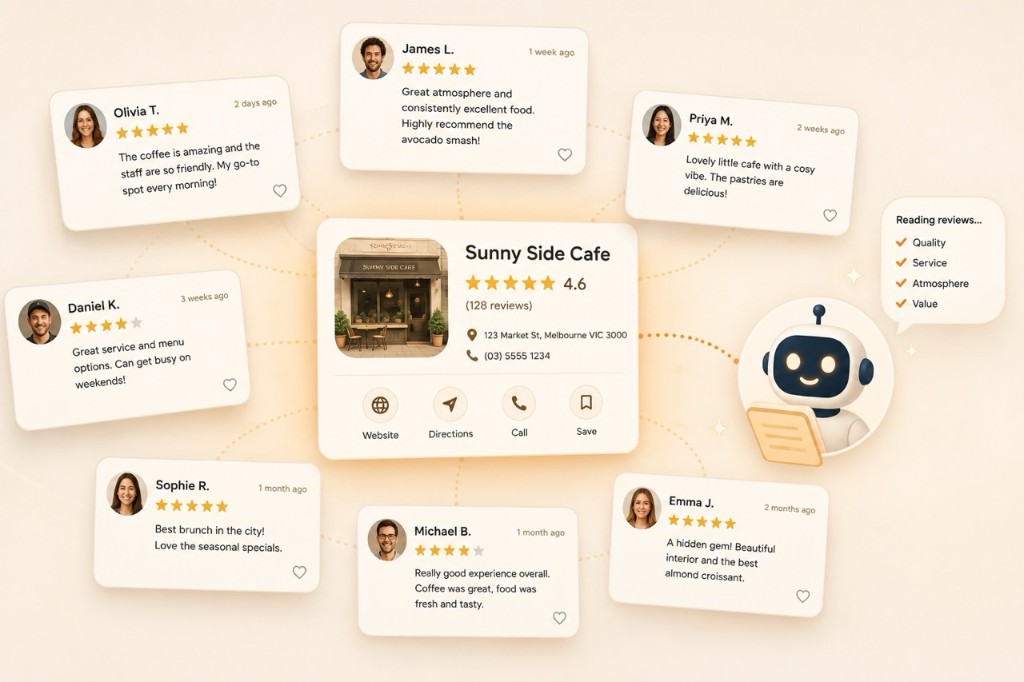
If GBP is the foundation, reviews are the popularity signal that AI weighs most heavily. Not just the star rating, but the quantity, the recency, and what the reviews actually say.
A business with 200 recent, detailed, four-and-a-half-star reviews will be recommended over a business with 50 old five-star reviews almost every time. AI reads the content of reviews, so if customers consistently mention “fast service,” “wheelchair accessible,” or “great with kids,” those phrases become reasons the AI cites you for relevant queries.
Make review-asking a system, not an afterthought. After every job, every visit, every transaction. The compounding effect over a year is enormous, and unlike most SEO work, it improves continuously without further effort once the system is running.
How to know if it’s working
Test it directly. Open ChatGPT, Claude, Perplexity and Google AI Overviews. Ask the queries your customers ask: “best [your service] in [your town],” “reliable [your service] near [local landmark],” “where to get [your service] in [town] under £X.”
Note which businesses are named. If you’re not in the list, look at who is, and look at what they have that you don’t. Then close the gaps. Repeat the test monthly.
This is the new local rank tracking. The businesses that take it seriously now will own the AI recommendation layer for years, while their competitors are still optimising for a search results page most of their customers have already stopped looking at.
Start with GBP, fix your schema, then write three pieces of citation-worthy content. That’s a fortnight’s work and it will change how often your business gets recommended, by humans and by the AI tools they’re increasingly asking instead.
Want a second pair of eyes on your site, schema and local footprint? Get started with SEO or contact us, we work with businesses across Leicestershire and beyond.
AI local search | FAQs
Google Business Profile, schema, reviews and testing your visibility in ChatGPT and AI Overviews.
How is showing up in ChatGPT different from traditional Google SEO?
Is Google Business Profile still important for AI search?
What schema markup do local businesses need?
LocalBusiness (or a subtype), Service, AggregateRating, and FAQPage. Check yours with Google's Rich Results Test or ask us via get started with SEO.How do reviews affect AI recommendations?
How do I test if my business appears in AI answers?
How long until changes show in AI Overviews?
No questions match your search. Try different keywords.