



Quick answer: After years of building WordPress and Elementor sites, we’ve shifted around 9 out of 10 of our new website projects onto a custom Astro stack, paired with Sanity for the CMS and Resend for transactional email. The reason is simple: Astro produces lightweight, HTML-first sites that load fast, score brilliantly for SEO, and aren’t dragged down by plugin bloat, security patches and incompatibilities. We still build in Elementor when it’s the right tool. We just don’t reach for it first any more.
For the story behind that decision, a Monday-morning outage and why we won’t go back, read why we killed Elementor and rebuilt everything in Astro. Want to learn the workflow yourself? See the Astro masterclass.
Last updated: 10 May 2026.
Why this matters if you’re getting a quote from us
If you’ve worked with us before, or you’re just looking through our portfolio, you’ll have seen plenty of WordPress and Elementor sites. They’re great. We’re proud of them. We still maintain them. But almost every new quote we send out now is built on a different stack: Astro + Sanity + Resend.
You don’t need to know what those words mean to make a decision. The short version is: your site will be faster, cheaper to keep healthy, easier for us to update for you, and friendlier to Google and AI search engines than the WordPress equivalent we’d have built two years ago. That’s the whole pitch in one sentence.
The longer version, for the curious, is below.
What we still love about WordPress and Elementor
This is important because we’re not the kind of agency that bins one technology to chase the next every six months. WordPress powers over 40% of the web for good reasons. Elementor lets non-technical people drag, drop and publish without filing a ticket. We’ve built more than 200 websites over the years and a big chunk of them sit on this stack.
For a lot of clients, particularly anyone who’s actively editing their site every week, that’s still the right answer. It’s familiar, it’s flexible, and there’s a plugin for almost anything you can dream up.
What we found, though, is that the same things that make WordPress easy to start with start to weigh sites down over time:
- Plugin bloat. Even a “simple” WordPress site often ends up with 15-20 plugins. Each one is code your visitor’s browser has to download.
- Security patches. WordPress is the most-attacked CMS in the world precisely because it’s the biggest. Keeping a site patched takes ongoing care.
- Plugin conflicts. One plugin updates, another breaks. Anyone who’s owned a WordPress site for a few years has seen this.
- Speed ceilings. You can make a WordPress site fast, but you fight the platform to get there. Caching, image optimisation, render-blocking scripts, it’s a full-time job.
- Editor sprawl. Elementor is wonderful for designers; it’s also a lot of weight in the page if you’re not careful.
None of this is fatal. We’ve shipped plenty of fast, secure, well-maintained WordPress sites. But it’s all work, work that has to keep being done long after the project is “finished.” We started asking whether there was a way to get the design freedom of Elementor and the editing comfort of WordPress without the maintenance overhead.
There is. It’s Astro.
What is Astro, in plain English?
Astro is a modern web framework that ships HTML-first websites. The simplest way to picture it: every page on your site is mostly pure HTML and CSS, the same lightweight building blocks the web has used since 1995, with a sprinkle of JavaScript only where it’s genuinely needed (a contact form, an animation, a search bar). No bloated theme. No 30 plugins layered on top. No render-blocking scripts you didn’t ask for.
The result is sites that:
- Load almost instantly, even on slow mobile connections.
- Score nearly perfect on Core Web Vitals (Google’s speed and stability scores, which are direct ranking factors).
- Pass accessibility checks more easily because the markup is clean.
- Don’t need to be “patched” every week because there’s no plugin ecosystem to keep up with.
We pair Astro with two other tools to give clients a familiar, friendly experience:
- Sanity for the CMS. This is the bit you log in to when you want to edit your site. It’s calm, fast and lives in your browser exactly like the WordPress dashboard does, but without the plugin chaos. We design the editing fields specifically for your site, so when you log in you see “Hero headline”, “Service block 3 image”, “Booking link”. not a giant pile of generic options.
- Resend for transactional email. Contact form submissions, booking confirmations, password resets, the emails that have to actually arrive. Resend has a much better deliverability record than the various WordPress SMTP plugins we used to wrestle with.
Astro for the front end, Sanity for editing, Resend for emails. That’s the whole stack.
And yes, we build it with AI
We’re not pretending otherwise. The reason we can offer custom-coded sites at the same prices we used to charge for Elementor builds is that AI-assisted coding tools have changed the economics of building a website.
Where a custom site used to mean weeks of bespoke development, it now means a designer with deep AI tooling who can produce production-quality code at a pace WordPress builders simply can’t match. We still review every line, we still own the quality, and we still test rigorously, but the time it takes us to ship a beautifully crafted, hand-coded site has collapsed. That’s why we can do this for the same money.
It’s also a big reason we’ve been honest about it on our pricing page. The whole industry is being reshaped by this in real time, and we’d rather tell you up front how we work.
What this looks like in the wild, four live sites built on the new stack
You don’t have to take our word for it. Here are the first sites we’ve shipped in the new stack. Open them on your phone, they should appear faster than almost any WordPress site you’ve used today.
Floors Galore, flooring retailer
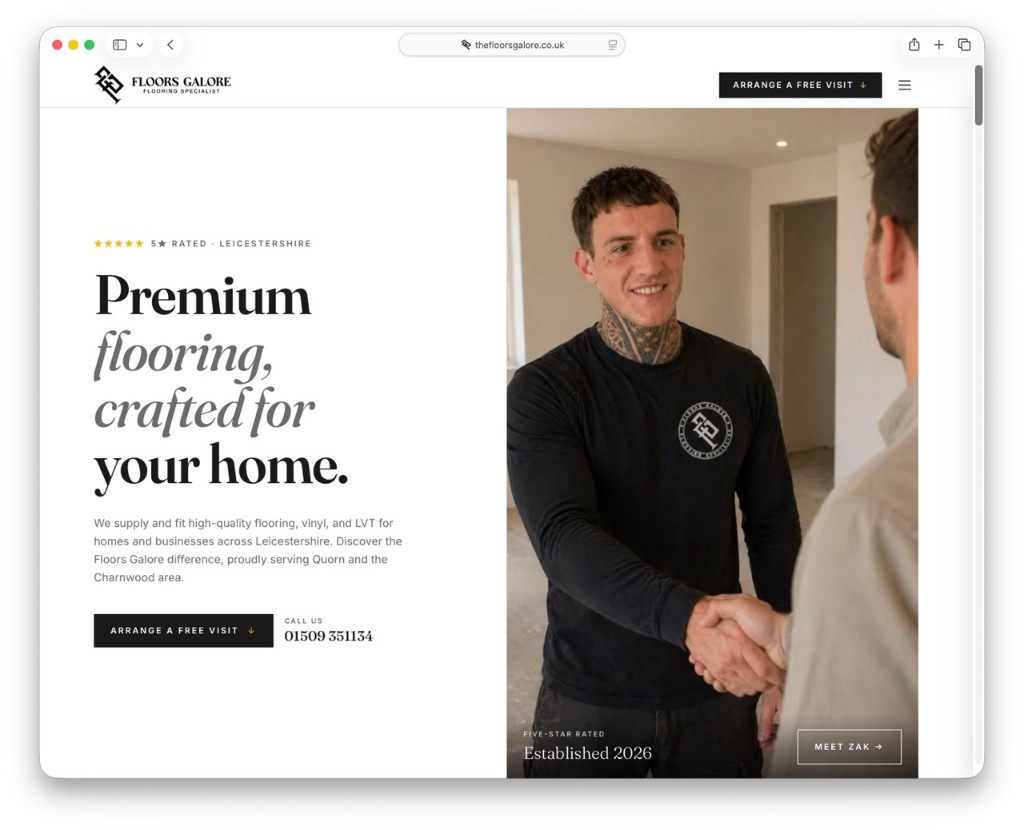
A clean, image-heavy product showcase. The kind of site that lives or dies on how quickly the gallery loads on a customer’s phone in a flooring shop. Astro made the speed effortless.
Dove Cottage Hospice

Recently rebuilt for a hospice that does extraordinary work for its community. Speed and accessibility matter especially here, visitors often land on the site in difficult moments and need clear, calm information without delay. The new build is significantly faster than the previous one and was a real privilege to work on.
ShutterLuxe, shutter specialists, Yorkshire
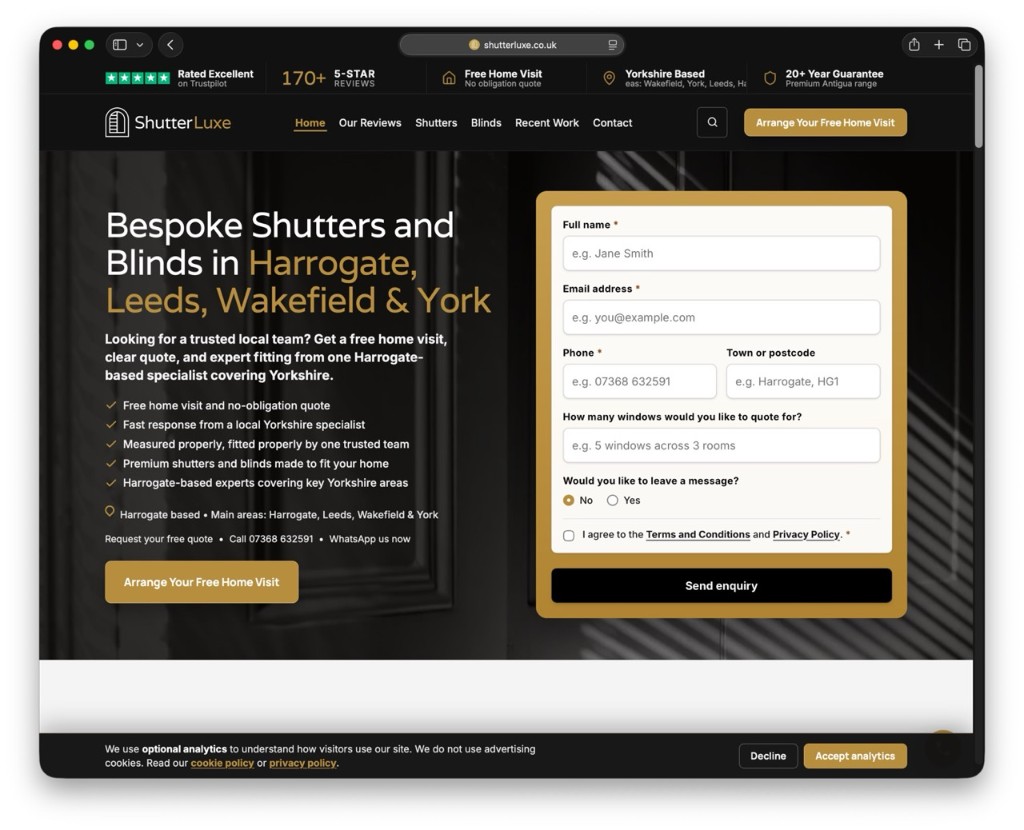
A service business with a strong visual story to tell. Astro lets us pile on high-resolution imagery without paying the speed penalty WordPress would charge for the same gallery.
Elegance Lingerie, lingerie boutique, Kent
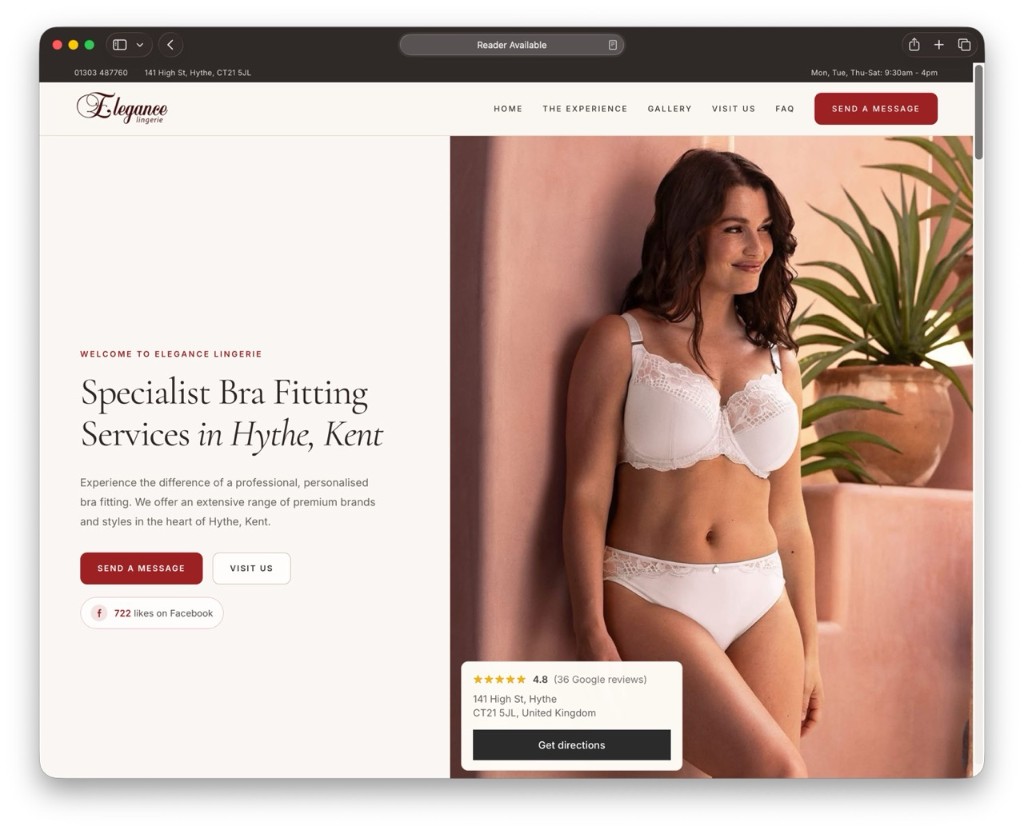
A boutique brand where the “feel” of the website matters as much as the products. The Astro build gave us pixel-level control over the experience while keeping the editing experience simple for the team behind the counter.
We’ve got more in the pipeline, and you can always check our portfolio for the latest.
What changes for you as a client?
In practical terms, four things:
1. Faster sites, better SEO. Google’s been weighing speed as a ranking factor for years; in 2026 it weighs it even more. Astro sites tend to land at 95+ on PageSpeed Insights without us even trying. That’s a meaningful difference when ranking for competitive terms like “web design Leicester” or “AI development Nottingham.”
2. Cheaper, calmer maintenance. No weekly plugin updates. No “this plugin broke after the last WordPress core release” panic emails. Hosting is also dramatically cheaper because the sites are static, most can run on a £0-£10/month plan with no performance hit.
3. Easier edits. When we hand over a Sanity dashboard, you see fields tailored to your site. Editing a homepage hero or swapping out a team member’s photo is two clicks. There’s no overwhelming “what does this thousand-option panel do?” feeling.
4. Better AI search visibility. Modern search engines like Perplexity and Google AI Overviews love sites with clean, fast-loading HTML and proper structured data. Astro makes that the default state, not a fight. We’re already seeing higher LLM citation rates on the new builds.
When we’d still recommend Elementor or WordPress
We’re not zealots. There are a few situations where WordPress is still the right call, and we’ll happily quote in it:
- You want to make heavy structural changes yourself, weekly. WordPress’s drag-and-drop is still the gentlest editing experience for non-technical owners who want to constantly redesign sections themselves.
- You need a specific WordPress plugin ecosystem. Some industries (membership sites, very particular booking systems, complex WooCommerce setups) have plugins that would take much longer to recreate from scratch.
- You already have a working WordPress site you love. We don’t recommend rebuilds for the sake of it. If your existing site is fast, secure and converting, our advice is usually to keep it and pour the budget into SEO and content instead.
When we quote, we’ll tell you which stack we’d recommend and why. There’s no upcharge or downcharge for either, the decision is genuinely about what’s right for you.
What’s next
The honest truth is that the tooling here is moving faster than any agency can keep up with. New AI coding tools land every month. Astro itself is evolving quickly. There will probably be another shift in 18 months that we’ll have to adapt to. We’re fine with that, staying just slightly ahead of the curve is half the job.
What won’t change is the goal: bring our clients the most up-to-date technology to build websites that look beautiful, load fast, rank well, and grow their business. The stack is just the means.
If you want to see what your site would look like in this new tech, we offer a free homepage preview on every Business Website project. We’ll design your homepage in Astro, send it over with a short video walkthrough, and you can decide for yourself whether it feels like a step up. No commitment, no pressure.
Ben, dotwall
Astro & Sanity FAQs
Common questions on moving from WordPress / Elementor to a modern Astro stack.
Is Astro better than WordPress?
For most small business websites in 2026, yes. Astro is faster, more secure, easier to maintain and friendlier to SEO. WordPress remains the better choice for owners who edit structurally every week or rely on specific plugins.
Will I still be able to edit my Astro website?
Is Astro good for SEO?
Astro is excellent for SEO. It ships HTML-first pages with very little JavaScript, leading to near-perfect Core Web Vitals scores. That's a direct Google ranking factor and also helps AI search engines like Perplexity and Google AI Overviews read and cite the site.
Do you still build WordPress and Elementor sites?
Will my Astro site need ongoing maintenance?
Is hosting cheaper for an Astro website?
Usually yes. Astro builds static HTML so most sites can run on free or near-free platforms like Cloudflare Pages, Netlify or Vercel, typically saving £15-£30 per month compared to managed WordPress hosting.
No questions match your search. Try different keywords.