

In 2026, a UK business owner can go from “we should really track this in a spreadsheet” to a working internal tool in an afternoon, without writing code by hand. That is genuinely useful. It is also easy to confuse a demo that impressed you on Tuesday with something you should put customer data into on Wednesday.
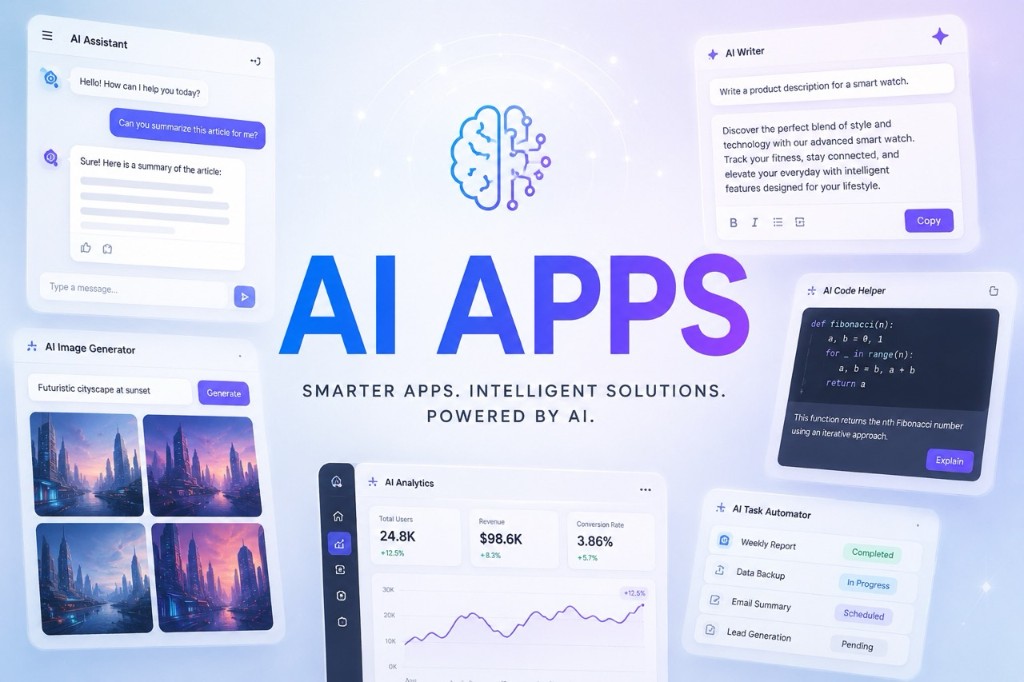
If you want the wider picture on how AI is changing marketing sites, content and search, read how AI is changing web design first. This piece doubles down on custom tools and internal apps, the sort of thing we sketch on the AI apps page, and what they cost to run responsibly next to a serious web design or SEO programme.
This post is the middle ground: what the cheap path looks like, where it breaks, and how to think about security, data protection and GDPR before you invite the world (or your clients) in.
The honest cost ladder
The floor is low. AI app builders and coding agents, for example Lovable, Bolt.new and Replit, are priced for experimentation, often £10–£40/month, sometimes with generous free tiers, because they want you hooked on the workflow, not scared off by enterprise pricing.
That buys you a first internal version: a job sheet generator, a simple CRM, a quoting helper, a dashboard glued to a Google Sheet. For many trades, retailers and professional services firms in Leicestershire and beyond, that is enough to prove the idea.
The next rung is different. The moment the tool is public-facing, persists real customer data, sends email, or sits on its own domain, you are in the world of hosting, DNS, TLS certificates, backups, auth, rate limits and abuse handling, closer to a shipped website design project than a weekend experiment. Budget roughly £100–£400/month as a realistic band for something you would not be embarrassed to show a regulator or a client, not because the models are expensive, but because reliability and compliance are. If you are comparing that to a marketing site rather than bespoke software, our website pricing page spells out how we price one-page and multi-page builds.
”App” versus “agent”. stop worrying about the label
You will hear both words thrown around. In practice:
- An AI app is just software that solves a job, invoicing, scheduling, inventory, a client portal.
- An AI agent is software that uses models to decide or execute steps, triaging enquiries, drafting replies, classifying leads.
Most useful business tools in 2026 are both: an app with agent-shaped behaviour inside it. The naming argument does not change what you must still get right: permissions, audit trails and human oversight anywhere money or reputation is on the line. If the agent touches customer-facing copy or metadata, the same habits that power good SEO, clear structure, honest claims, pages you can maintain, still apply.
Security is not automatic
AI-generated code can look finished long before it is safe. Before you store any client or employee personal data, treat these as non-negotiable:
- HTTPS everywhere, no mixed content, no “we’ll add TLS later” (Mozilla’s TLS explainer is a solid technical refresher).
- Encryption at rest for the database or file store you actually use.
- Managed authentication (don’t roll your own passwords in a hurry).
- Two-factor authentication for admin accounts.
- Written retention, how long you keep data and how you delete it.
- A second pair of eyes on exposed endpoints before launch, ideally someone who has shipped web apps before, not just prompted them. The OWASP Top 10 and OWASP API Security Top 10 are the checklists most engineers reach for; the NCSC’s Small Business Guide frames the same risks for non-developers.
If that list feels heavy for a “quick CRM”, good, that is the correct gut feeling for customer data. For day-to-day devices and networks, many of our clients pair web projects with IT support so patches and backups are not an afterthought.
GDPR is a design exercise, not a checkbox
Building in the UK does not magically make you compliant. You need to know your lawful basis, collect only what you need, tell people clearly what you do with their data, and be able to handle access requests and breaches within 72 hours where the rules apply. Special category data, health, biometrics, trade union membership, and similar, raises the bar further.
The ICO guide to the UK GDPR and ICO SME web hub are the authoritative places to start; GOV.UK’s data protection and your business links through to wider obligations. None of that is impossible for a small business; it is just easier to get wrong in an AI-generated rush than in a traditional project where someone asks awkward questions early, which is why we publish a plain-English data protection overview alongside our privacy policy.
Prototype first, graduate deliberately
Yes, you can get a first working internal CRM in a few hours. You should. It teaches you what fields you actually use, what reports matter, and which integrations are fantasies.
What you should not do is confuse that prototype with the multi-user, permissioned, integration-heavy system you might need in twelve months. Ship the simple version, use it, then decide whether to harden it, rebuild it, or buy off-the-shelf. If the end goal is mostly lead capture and credibility rather than a database product, a focused one-page website or services hub is often the faster route to revenue.
Rebuild cycles are shorter now
Plan for 12–24 months before you are tempted to replace or substantially refactor a custom AI-built app, not because it was built badly, but because the tooling improves faster than traditional stacks did. The upside is that rebuilding often takes a fraction of the original time if you kept your requirements honest and your data portable. Whatever ships under your brand, brochure site or internal tool, benefits from the same discipline as care packages: updates, monitoring and someone to call when something breaks.
Official and industry further reading
These are independent references we point clients to when they outgrow the prototype:
- ICO. UK GDPR guide, lawful basis, accountability, DPIAs, breaches.
- ICO. SME web hub, short explainers aimed at smaller organisations.
- NCSC. Small Business Guide, practical cyber security before you expose an app to the internet.
- OWASP Top 10 and OWASP API Security Top 10, structured review lists for web and API surfaces.
- GOV.UK. AI regulation white paper, how UK policymakers frame risk, transparency and accountability (useful context, not legal advice).
When dotwall fits in
We still spend most of our time on websites that convert, SEO that compounds, see get started with SEO if you are new to it, and care that keeps sites fast and safe. But the same principles apply when you outgrow the prototype: domains, email delivery, hosting, auth, security review and someone who answers the phone when it breaks.
If you have an AI-built tool and want a sanity check before you put customers on it, say hello or grab a free homepage mock-up if it is the marketing site that needs attention first. We are happy to help you separate “good enough for the warehouse” from “good enough for the homepage”.
AI apps for UK small businesses | FAQs
Straight answers on cost, security, agents vs apps, CRM builds and GDPR.
What's the cheapest way to build an AI app for my UK small business?
Are AI-built apps safe for storing client data?
What's the difference between an AI app and an AI agent?
Can I really build a CRM in a few hours?
Do I need a developer to build an AI app in 2026?
Is it GDPR-safe to build a customer-facing AI app in the UK?
How long before I should rebuild a custom AI app?
No questions match your search. Try different keywords.