

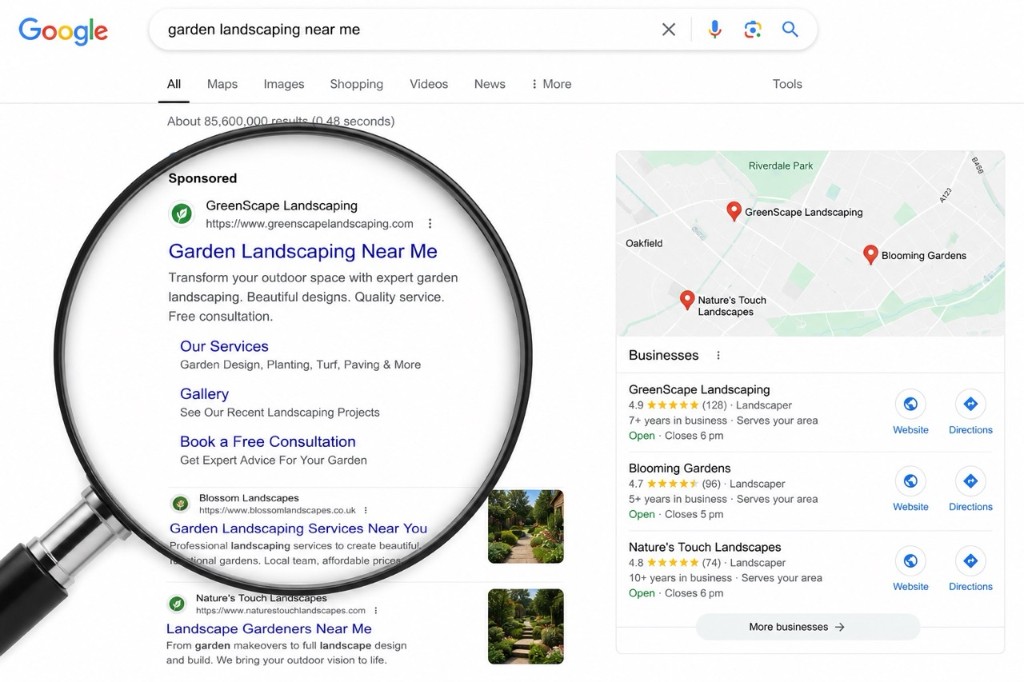



Quick answer: In 2026, website speed is no longer just a technical checkbox for developers. It is the foundation of your online success. With 47% of users expecting sites to load in under two seconds, a slow website is actively costing you customers, enquiries, and Google rankings. If your site takes longer than three seconds to load on mobile, you are losing over half of your potential audience before they even see your logo.
Last updated: 16 May 2026.
The hidden cost of a slow website in 2026
We speak to small business owners every week who are frustrated that their website isn’t generating leads. They’ve invested in a beautiful design, written great copy, and perhaps even paid for SEO services. But when we look under the hood, we often find the same culprit: the site is simply too slow.
In 2026, patience is at an all-time low. The statistics are stark and unforgiving:
- 47% of people expect an average site to load in under 2 seconds.
- 53% of mobile users will abandon a page if it takes longer than three seconds to load.
- As page load time increases from 1 to 10 seconds, the probability of a user bouncing (leaving immediately) increases by up to 123%.
Think about what that means for your marketing budget. If you are spending money on Google Ads, social media marketing, or SEO to drive traffic to your site, a slow loading time means you are effectively throwing half of that money away. You are paying for clicks, but the users are leaving before the page even renders.
Speed and the bottom line: Conversions
It’s easy to think of website speed as an abstract technical metric, but it has a direct, measurable impact on your revenue.
For B2B websites, the data shows that a site loading in 1 second has a conversion rate 3x higher than a site that loads in 5 seconds, and 5x higher than a site that loads in 10 seconds. Furthermore, a mere one-second delay in mobile load times can impact conversion rates by up to 20%.
Every second your customer spends waiting is a second they spend reconsidering their purchase or enquiry. It’s a moment of friction that breaks trust. In fact, 79% of shoppers who are dissatisfied with site performance say they are less likely to purchase from the same site again.
Core Web Vitals: Google’s performance standard
Google understands that user experience is paramount. That’s why they introduced Core Web Vitals, a set of specific metrics that measure loading performance, interactivity, and visual stability. You can read Google’s own guidance in the Search Central documentation and test any URL with PageSpeed Insights.
In 2026, Core Web Vitals remain a confirmed ranking factor. While great content is still king, if Google has to choose between two sites with similar content, the faster, more stable site will win the higher ranking.
More importantly, speed affects other crucial SEO signals. If users are constantly bouncing back to the search results because your site is slow, Google interprets this as a sign that your site is not a good result for that query, which will drag your rankings down over time.
Why older websites struggle to keep up
Many small business websites built a few years ago, particularly those using heavy page builders on traditional platforms like WordPress, struggle to meet modern speed expectations. They often suffer from:
- Plugin bloat: Too many plugins adding unnecessary code to every page.
- Heavy themes: Themes packed with features you don’t use, slowing down the browser.
- Unoptimised images: Large image files that take forever to download on mobile connections.
- Excessive JavaScript: Scripts that block the main thread and delay the page from becoming interactive.
The modern solution: HTML-first web design
This performance gap is exactly why we have shifted our approach at Dotwall Web Design. While we still maintain and build WordPress sites when it’s the right fit, around 9 out of 10 of our new builds in 2026 use a modern Astro + Sanity stack.
Astro is an HTML-first framework. Instead of sending massive amounts of JavaScript to the user’s browser and forcing their device to build the page, Astro does the heavy lifting on the server. It delivers clean, lightweight HTML that loads almost instantly.
The result? Near-perfect Core Web Vitals scores, happier users, better conversion rates, and a site that Google loves to rank.
Is your website holding you back?
If your website feels sluggish, or if your traffic isn’t converting into enquiries, speed is the first place you should look. You can test your site yourself using free tools like Google PageSpeed Insights.
If you’re seeing red scores and warnings about Core Web Vitals, it might be time to consider a rebuild. A fast, modern website isn’t just a nice-to-have in 2026, it’s a fundamental requirement for doing business online.
Sources
Website speed FAQs
Common questions about website performance, Core Web Vitals, and SEO in 2026.
How fast should my website load in 2026?
In 2026, users expect an average site to load in under 2 seconds. If your site takes longer than 3 seconds to load on mobile devices, over half of your visitors will likely leave before seeing your content.
What are Core Web Vitals?
Core Web Vitals are a set of specific factors that Google considers important in a webpage's overall user experience. They measure loading performance, interactivity, and visual stability of the page.
Does website speed actually affect my Google rankings?
Yes. While it's not the only factor, Core Web Vitals remain a confirmed Google ranking signal in 2026. A fast website acts as a tie-breaker in competitive search results and significantly improves user engagement metrics, which indirectly boosts SEO.
How does website speed impact my sales and enquiries?
The impact is massive. For B2B websites, a site that loads in 1 second has a conversion rate 3x higher than a site that loads in 5 seconds. Every one-second delay in mobile load times can drop your conversion rates by up to 20%.
Why are WordPress sites often slower than modern alternatives?
No questions match your search. Try different keywords.